Could Fashion Exist Without Colors?

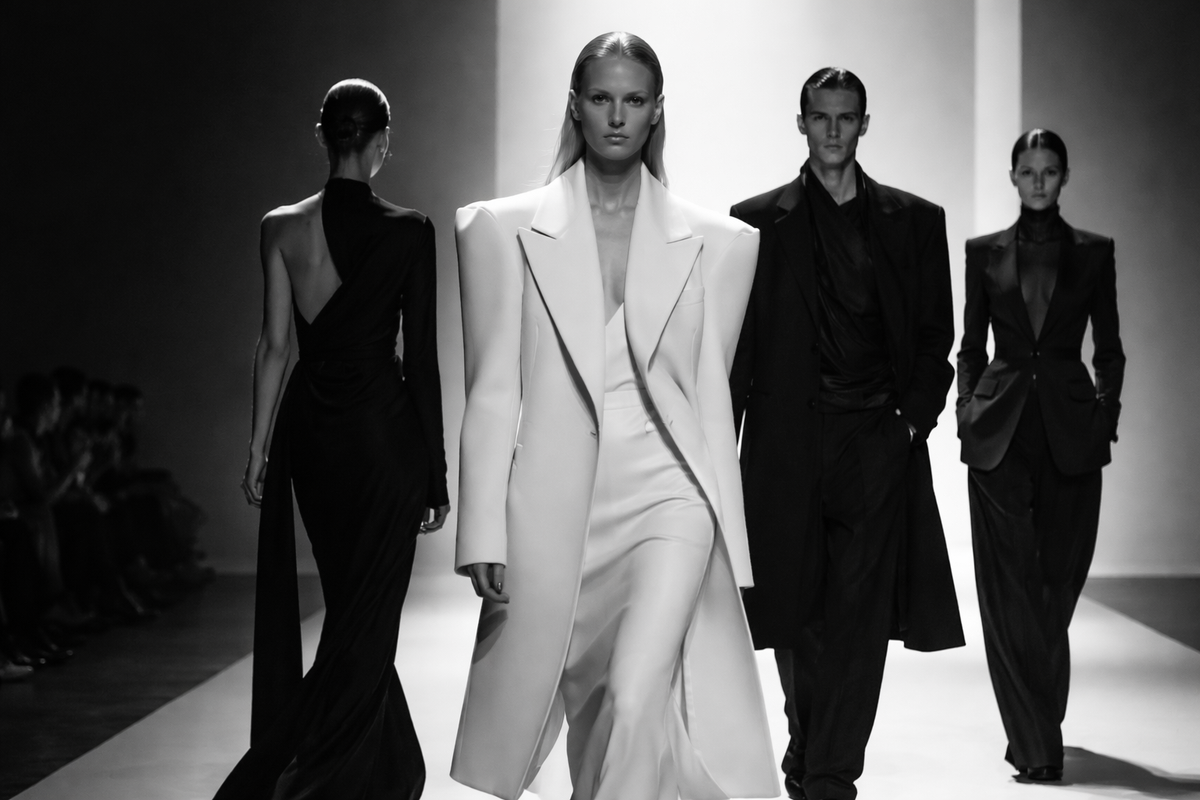
Fashion and color are so tightly intertwined that imagining one without the other feels almost absurd. Red dresses signal passion, black suits convey authority, and pastels whisper softness and ease. But strip away the rainbow and a provocative question emerges: could fashion exist without colors at all? Not “less color” or “muted tones,” but a truly colorless world—dominated by black, white, and everything in between.
Surprisingly, the answer is not only yes, but fashion already does. From historical necessity to modern minimalism, from avant-garde runways to digital wardrobes, colorless fashion has always played a central role. The real question is not whether fashion can exist without colors, but how fashion changes when color is no longer the star of the show.
This article explores that question through history, psychology, design, culture, and future trends—globally, analytically, and with a dash of wit.
Fashion Before Color Was a Choice
For much of human history, color in clothing was a privilege, not a right. Natural dyes were rare, expensive, and labor-intensive. Royalty wore vivid hues like purple and crimson, while the majority of people dressed in shades derived from wool, flax, and cotton—off-whites, browns, greys, and blacks.
In medieval Europe, sumptuary laws even restricted who could wear certain colors. Fashion still existed, but it relied on silhouette, texture, layering, and symbolism, not chromatic variety. Clothing communicated social rank, occupation, and morality long before it communicated personal expression through color.
This historical reality proves an essential point: fashion does not require color to function as fashion.
The Power of Black, White, and the In-Between
A colorless fashion world would not be empty; it would be highly nuanced. Black and white are not opposites so much as anchors.
- Black represents elegance, rebellion, authority, mourning, and modernity—often simultaneously.
- White symbolizes purity, minimalism, neutrality, and futurism, depending on context.
- Grey operates as fashion’s diplomatic middle ground, subtle but expressive.
Designers have repeatedly returned to these tones during cultural moments of seriousness or reinvention. Economic recessions, wars, and technological shifts often produce restrained palettes, where form and function matter more than spectacle.
In other words, when color steps back, meaning steps forward.
Designers Who Already Proved It’s Possible
Several designers have built global reputations while deliberately limiting or rejecting color altogether.
- Yohji Yamamoto transformed black into a philosophical statement, using asymmetry and draping to challenge Western beauty norms.
- Rei Kawakubo, through Comme des Garçons, explored abstraction and imperfection largely through monochrome collections.
- Rick Owens built a cult following around shadowy palettes that emphasize silhouette, proportion, and attitude.
These designers demonstrate that color is optional, but concept is not. Without color, garments demand closer attention—and reward it.
Fashion Psychology Without Color
Color psychology is a powerful tool in fashion marketing, but its absence does not neutralize emotion. Instead, psychology shifts toward other sensory inputs.
- Texture: Leather, wool, silk, latex—materials become emotionally charged.
- Shape: Oversized tailoring versus sharp minimalism changes how authority or vulnerability is perceived.
- Movement: Flowing fabric versus rigid structure creates emotional contrast.
Interestingly, removing color can make clothing feel more intimate. Without the distraction of hue, the wearer notices how a garment feels, fits, and moves. Fashion becomes less performative and more experiential.
From a consumer perspective, monochrome wardrobes also reduce decision fatigue. This explains the popularity of capsule wardrobes and uniform dressing among creatives and business leaders worldwide.
Monochrome as Cultural Language
Different cultures already use limited color palettes to convey deep meaning.
- In Japan, minimal color aligns with aesthetic philosophies like wabi-sabi, emphasizing restraint and imperfection.
- In many Western contexts, black clothing has evolved from mourning wear into a symbol of intellectualism and sophistication.
- In urban subcultures globally, monochrome fashion often signals resistance to mainstream trends.
A colorless fashion world would not be culturally empty—it would be culturally louder, relying on form, symbolism, and context rather than visual spectacle.
The Role of Color in Trend Cycles
Organizations like Pantone shape global fashion narratives through “Color of the Year” announcements. These forecasts influence designers, retailers, and marketers worldwide.
But trend forecasting itself reveals an interesting truth: color trends are cyclical precisely because they are superficial layers. When trends exhaust consumers, fashion often retreats into neutrality—black coats, white sneakers, grey tailoring—before color surges again.
If color vanished entirely, trend cycles would not stop. They would simply migrate toward construction, sustainability, and innovation.
Sustainability and a Colorless Future
From an environmental standpoint, fashion without color is compelling.
Dyeing textiles is one of the most polluting stages of garment production, consuming vast amounts of water and chemicals. A largely colorless fashion industry could dramatically reduce environmental damage.
This aligns with global sustainability initiatives promoted by organizations such as United Nations, particularly within responsible consumption frameworks.
Undyed, recyclable, and material-focused fashion could redefine luxury—not as excess, but as restraint.
Digital Fashion Without Color
As fashion increasingly enters digital spaces—avatars, virtual runways, and AI-generated garments—the necessity of color diminishes further. In virtual environments, silhouette, animation, and conceptual design matter more than pigment.
A black-and-white digital outfit can feel futuristic, timeless, or unsettling, depending on execution. Without physical limitations, designers can experiment with exaggerated proportions and impossible forms—proving again that fashion’s essence lies beyond color.
Would We Miss Color?
Of course we would. Color is joyful, emotional, and deeply human. But missing something does not mean we cannot live—or dress—without it.
Fashion without color would likely feel:
- More architectural
- More intellectual
- Less trend-driven
- More inclusive across cultures
Instead of asking, “What color is in this season?” people might ask, “What does this garment say?”
That shift alone would radically change the industry.
So, Could Fashion Exist Without Colors?
Yes—and it already does.
Fashion without color is not fashion without meaning. It is fashion that relies on shape instead of shade, substance instead of spectacle, and intention instead of impulse. History proves it, designers practice it, sustainability encourages it, and digital fashion accelerates it.
Color enhances fashion, but it does not define it.
Remove color, and fashion does not disappear. It simply reveals its bones—and sometimes, that is where the real beauty lives.
External References for further reading
- The Metropolitan Museum of Art – Fashion & Textile History
https://www.metmuseum.org/toah/keywords/fashion
(Used to support historical context around pre-industrial clothing, materials, and non-color-based fashion.) - Victoria and Albert Museum – Fashion, Textiles & Design
https://www.vam.ac.uk/collections/fashion
(Credibility reference for fashion evolution, silhouettes, and material-led design.) - Pantone Color Institute – Color Theory and Trend Forecasting
https://www.pantone.com/articles/color-intelligence
(Supports analysis around color psychology, trend cycles, and industry reliance on color forecasting.) - British Fashion Council – Sustainability in Fashion
https://www.britishfashioncouncil.co.uk/business-support/sustainability
(Referenced for discussions on environmental impact, dyeing processes, and future fashion models.) - United Nations Environment Programme – Sustainable Fashion
https://www.unep.org/explore-topics/resource-efficiency/what-we-do/sustainable-fashion
(Used to validate sustainability arguments and global environmental impact of textile production.) - Business of Fashion – Minimalism and Modern Fashion Trends
https://www.businessoffashion.com
(Industry-level insight into minimalism, monochrome fashion, and consumer behavior.)


