FAQs about Higgs Boson | God Particle


The God Particle is one of the most famous terms in modern physics, yet it is also one of the most misunderstood. The name refers to the Higgs boson, a fundamental particle connected to the Higgs field, which helps explain why certain particles have mass. Its discovery in 2012 marked a major milestone in particle physics and confirmed a key prediction of the Standard Model. Despite the dramatic nickname, the Higgs boson is a scientific concept rather than a religious one. These frequently asked questions explain what the God Particle is, how it was found, and why it remains important to our understanding of the universe.
What is the God Particle?
The God Particle is the popular nickname for the Higgs boson, an elementary particle associated with the Higgs field. Scientists believe this field exists throughout the universe and plays a key role in giving mass to many fundamental particles.
Why is it called the God Particle?
The term originated from a popular science book and was not chosen by most physicists. The nickname attracted public attention but can be misleading because the Higgs boson is a scientific discovery and has no direct connection to religious beliefs.
What is the Higgs boson?
The Higgs boson is a fundamental particle predicted by the Standard Model of particle physics. It is considered evidence that the Higgs field exists, helping scientists understand why some particles possess mass while others do not.
What is the Higgs field?
The Higgs field is an invisible energy field believed to exist everywhere in space. As particles interact with this field, they acquire mass. Different particles interact with the field to different degrees, resulting in different masses.
Who predicted the Higgs boson?
The concept was proposed in the 1960s by several physicists, including Peter Higgs. Their work suggested a mechanism that could explain how fundamental particles obtain mass without breaking important physical laws.
When was the God Particle discovered?
The Higgs boson was discovered in 2012 after decades of research. Scientists announced evidence for the particle on July 4, 2012, marking one of the most significant achievements in modern experimental physics.
Where was the Higgs boson discovered?
The particle was discovered at CERN, near Geneva. Researchers used powerful particle accelerators and detectors to observe evidence consistent with the long-predicted Higgs boson.
How was the God Particle discovered?
Scientists accelerated protons to extremely high energies and collided them inside the Large Hadron Collider. By analyzing the particles produced during these collisions, researchers identified signatures matching the predicted properties of the Higgs boson.
What is the Large Hadron Collider?
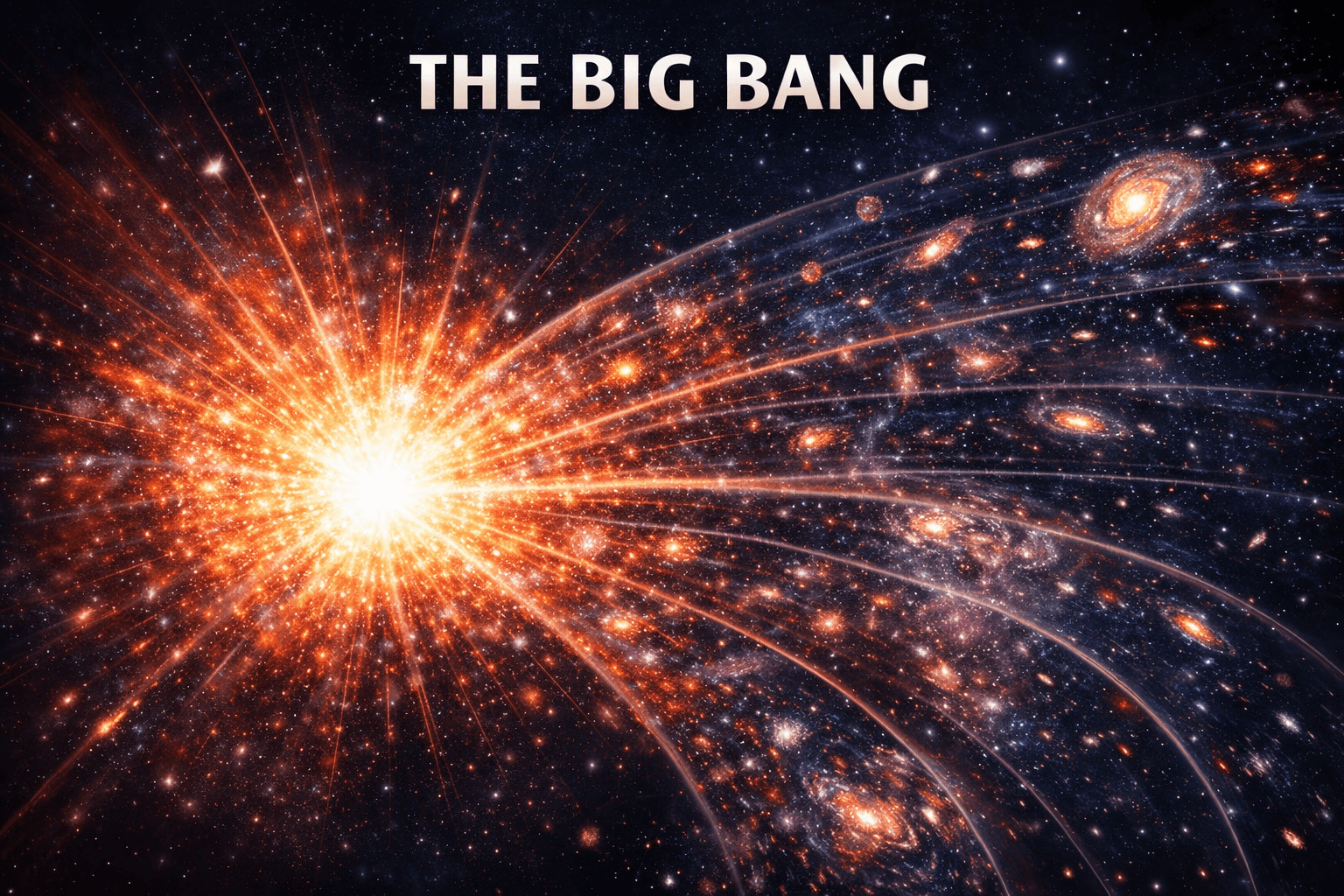
The Large Hadron Collider is the world's largest and most powerful particle accelerator. It was designed to study fundamental particles by creating high-energy collisions that recreate conditions similar to those shortly after the Big Bang.
Why is the Higgs boson important?
The Higgs boson confirms the existence of the Higgs field and supports the Standard Model. Without this discovery, scientists would have lacked crucial evidence for one of the most important mechanisms explaining particle mass.
Does the Higgs boson give all matter its mass?
Not entirely. The Higgs field contributes to the mass of many fundamental particles, but much of the mass of everyday objects comes from the energy binding particles together inside atomic nuclei.
Is the God Particle the smallest particle?
No. The Higgs boson is one of many elementary particles. Other particles, such as electrons and quarks, are also considered fundamental and are not known to contain smaller components.
Can the Higgs boson be seen directly?
No. The Higgs boson exists for only a tiny fraction of a second before decaying into other particles. Scientists detect it indirectly by studying the products of its decay after high-energy collisions.
What did the discovery prove?
The discovery provided strong evidence that the Higgs mechanism is correct. It confirmed a major prediction of the Standard Model and filled one of the last missing pieces in the theory describing fundamental particles.
Is the God Particle related to dark matter?
There is currently no confirmed connection. While some theories suggest links between the Higgs boson and dark matter, scientists have not yet found definitive evidence connecting the two.
Did the discovery win a Nobel Prize?
Yes. In 2013, Peter Higgs and François Englert received the Nobel Prize in Physics for the theoretical work that led to the prediction of the Higgs mechanism.
Is the Higgs boson dangerous?
No. The particle poses no danger. Higgs bosons are produced naturally in high-energy events throughout the universe, and experiments at particle accelerators operate under extensive scientific and safety oversight.
Does the God Particle explain gravity?
No. The Higgs boson explains how certain particles acquire mass, but it does not explain gravity itself. Gravity remains described by a different framework, and a complete theory unifying all forces remains unresolved.
Are scientists still studying the Higgs boson?
Yes. Researchers continue measuring its properties with increasing precision. Studying the Higgs boson may reveal new physics beyond the Standard Model and help answer questions about dark matter, the early universe, and fundamental forces.
Could there be more Higgs particles?
Possibly. Some theories predict additional Higgs-like particles beyond the one already discovered. However, no extra Higgs particles have been confirmed, and experiments continue searching for evidence.
What does the God Particle tell us about the universe?
The Higgs boson helps explain why fundamental particles have mass, making atoms, stars, planets, and life possible. Its discovery deepened our understanding of the universe and remains one of the greatest achievements in modern physics.
The God Particle, or Higgs boson, transformed particle physics by confirming a crucial part of the Standard Model. While it does not answer every mystery of the universe, it provides key insights into how matter acquires mass. Ongoing research continues to explore its properties and potential connections to unanswered questions about dark matter, fundamental forces, and the origins of the cosmos.
 Team qwikFAQs
 Team qwikFAQs
 Team qwikFAQs
 Team qwikFAQs